FairByDesign Reporting
Mercury Brief
The Mercury Brief — FairByDesign’s free weekly signal on AI governance, security, privacy and accountability. Fast, credible orientation on what matters.
All reportingInvestigationsMercury BriefField papersGovernance resourcesNews
-
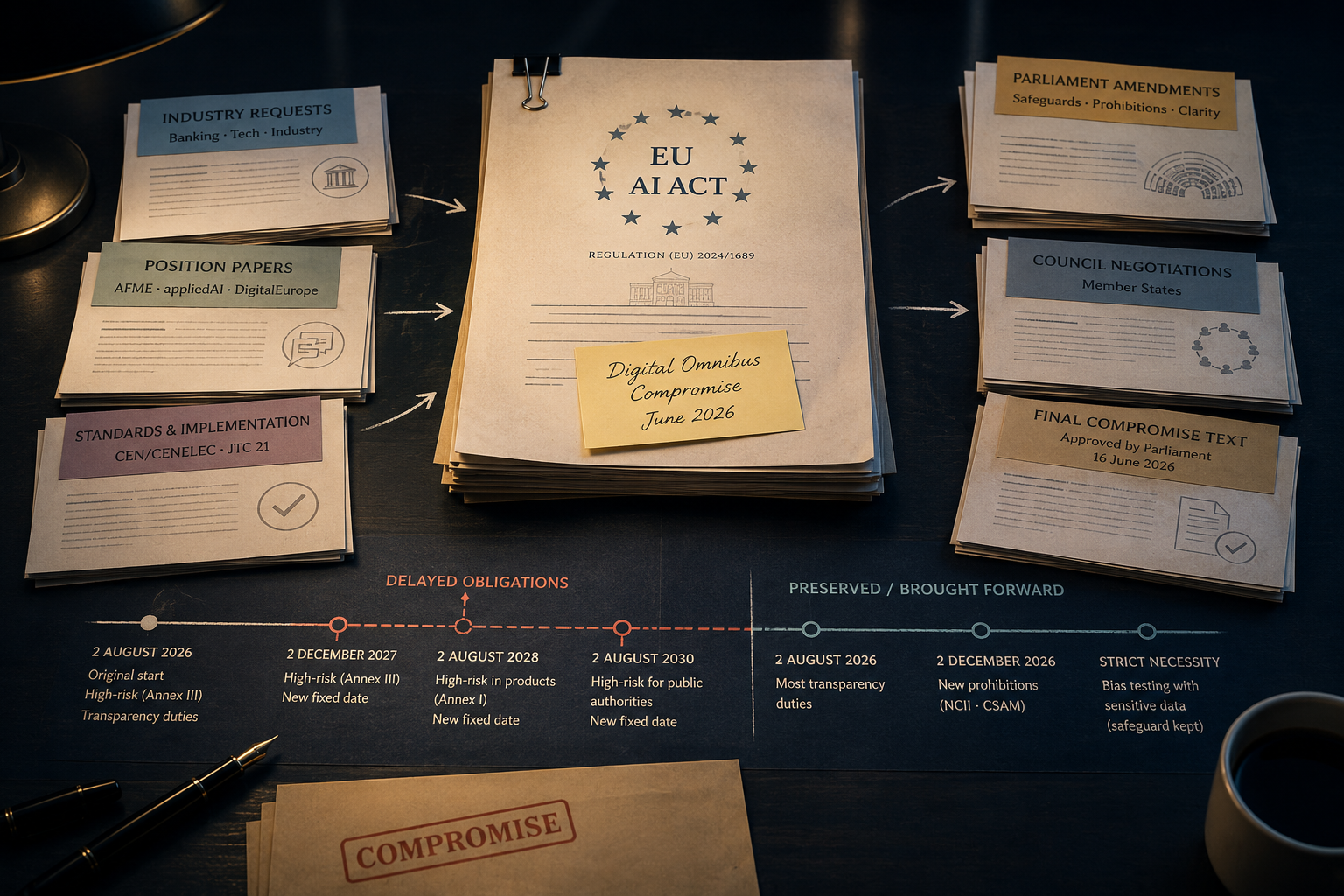
Who Sought to Reorder the AI Act? What the Open Record Shows About the Digital Omnibus
The EU moved its hardest AI deadlines just weeks before they were due to apply. This paper traces which industry requests entered the Digital Omnibus, which were rejected, who benefits…
-

Can You Reconstruct What Your AI Did?
Most organizations can describe their AI governance. Far fewer can reconstruct what happened when an AI-enabled decision goes wrong. Paper IV of Project Sentinel introduces the Reconstruction Principle and a…
-

The Export-Control Order That Took Anthropic’s Frontier Model Offline
“The off switch was real. It just wasn’t in the building you thought it was.”
-
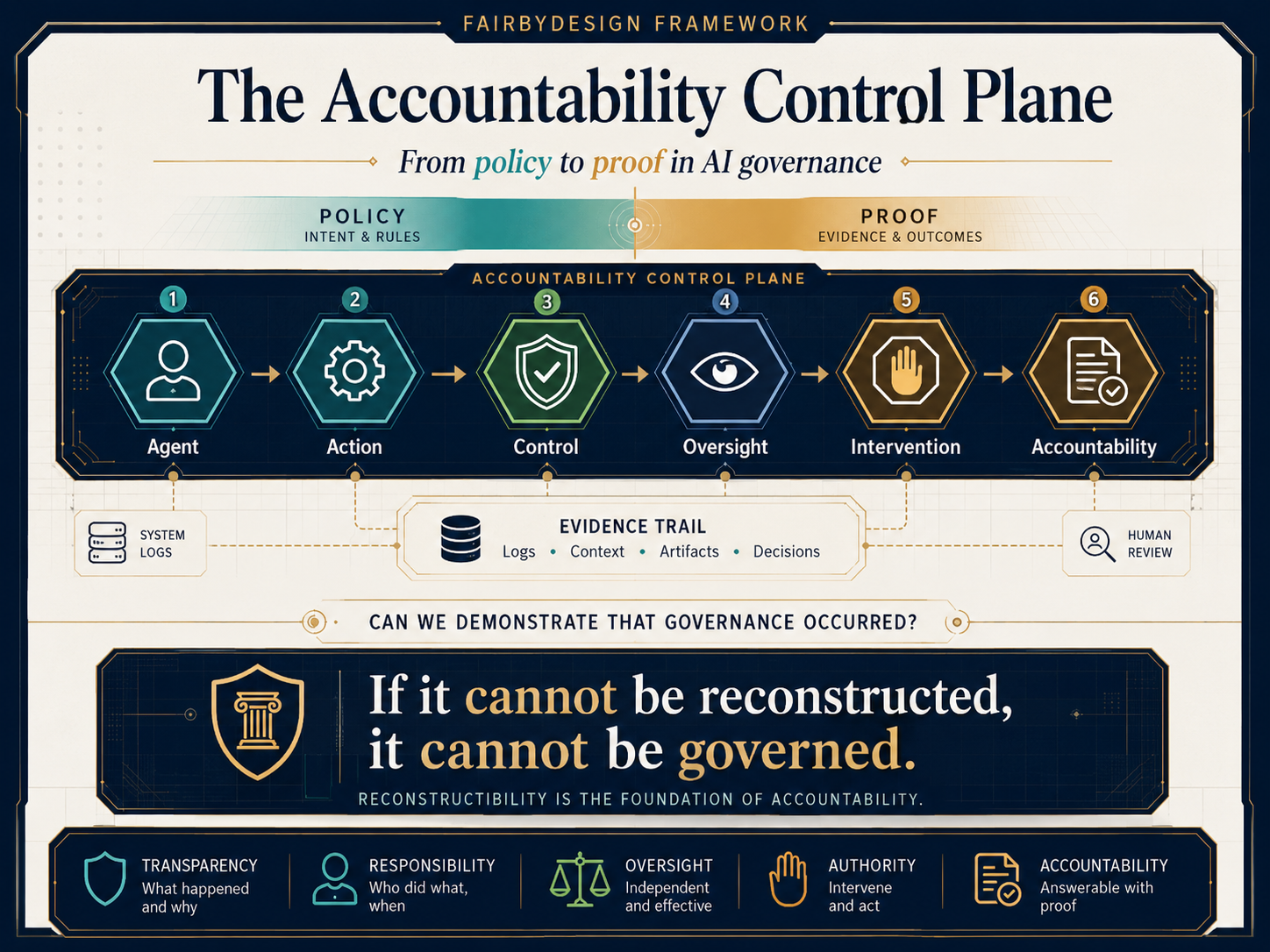
The Accountability Control Plane Public Brief
Most organizations can prove they have an AI policy. Far fewer can prove what actually happened the last time an AI system shaped a real decision.
-
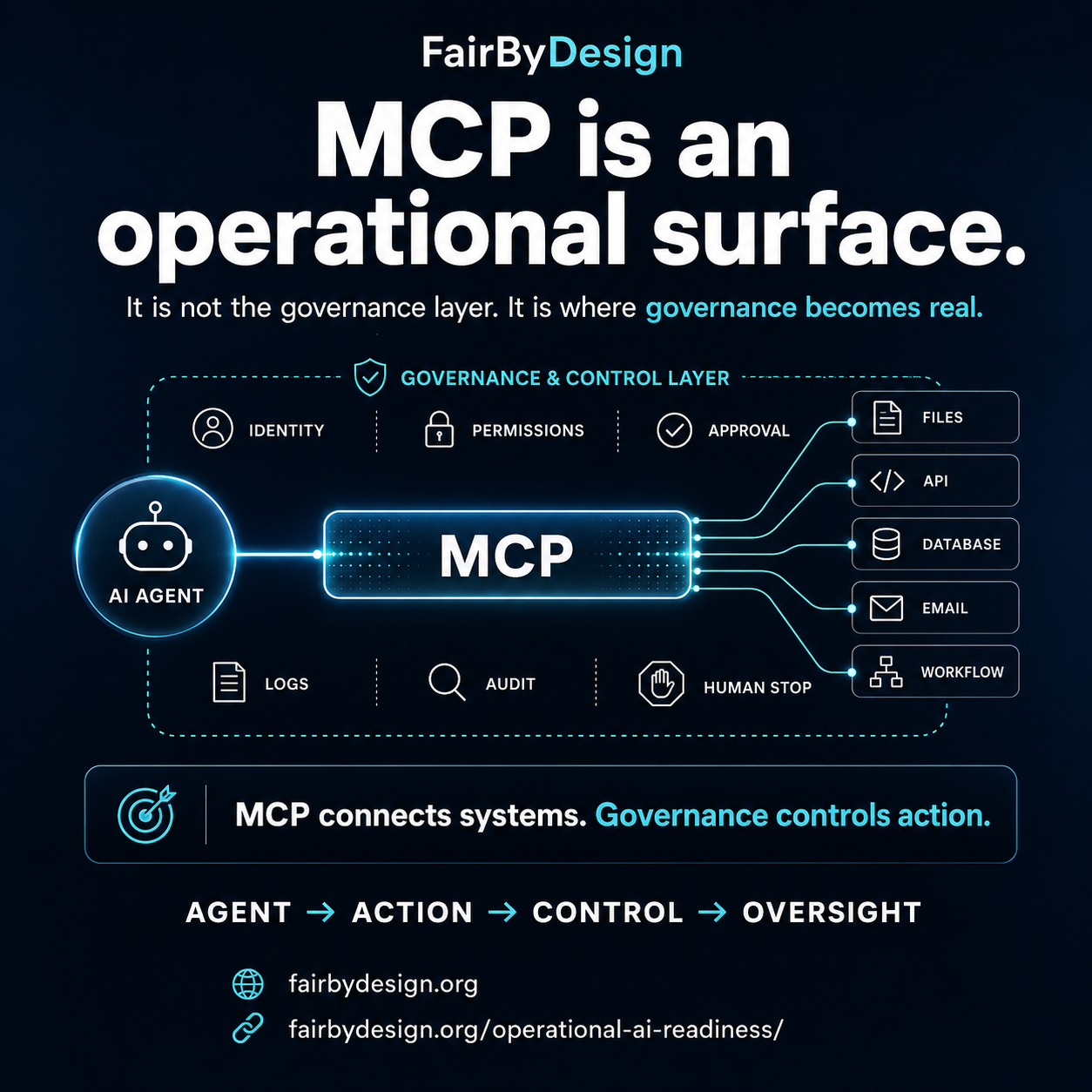
MCP Is an Operational Surface. Governance Has to Catch Up.
FairByDesign — Operational AI Governance Series Field Signal Model Context Protocol, or MCP, is mostly discussed as an integration breakthrough. That is accurate, but incomplete. Anthropic introduced MCP on November…
-

The Accountability Gap — public Field Paper
AI governance is no longer just about accuracy. It’s about whether anyone stays accountable when AI shapes decisions — the accountability gap, and how to close it.
-

The Proof Deficit: Why AI Governance Is Moving From Principles on Paper to Controls in Systems
AI governance is shifting — from principles on paper toward controls running inside live systems. The unresolved problem is no longer a knowledge deficit. The field knows what responsible AI…
-

Ratified by the EU, Rewritten in Colorado: AI Governance Diverges
In a single week of May 2026, the EU ratified the first binding international AI treaty while Colorado repealed and replaced America’s broadest state AI law with a narrower automated-decision…
-
The AI Enforcer Already Open for Business Is Called the GDPR
While much of the AI Act’s use-based high-risk regime is set to move to December 2027, and product-integrated high-risk systems to August 2028, data-protection authorities have kept fining AI-enabled biometrics…
-

The Regime That Got Nothing: GPAI Enforcement Still Arrives on 2 August
The 7 May Omnibus deal — still a provisional agreement, pending formal adoption — would delay the high-risk rules. It leaves the general-purpose AI obligations exactly where they are. For…
-

Twelve Days Apart: Brussels Moved the Deadline, Then Told You How to Meet It
The EU delayed its high-risk AI obligations on 7 May and published 148 pages of classification guidance on 19 May. Read together, the two acts say the same thing —…
-

AI in Cybersecurity: From Defense to a New Attack Surface
The headlines in September 2025 highlight a paradox. As governments and enterprises adopt advanced AI tools to strengthen cyber-defense, attackers are exploiting the same technology to probe weaknesses and launch…
-

The UN Security Council’s New AI Initiative: From National Agendas to Global Responsibility
In September 2025, the UN Security Council elevated AI to the level of global peace and security concerns, opening talks on frameworks to counter AI-driven cyberattacks, disinformation, and autonomous weapons.…